Dear Mr. Rucker
Here's why I didn't put your band in my documentary.

This past Sunday morning, as is my habit, I relaxed with a cup of coffee and my copy of the Nashville Tennessean (support local newspapers!). Inside, I found this feature-length profile of Darius Rucker, a Nashville-based singer-songwriter who is enjoying a successful career as a country artist after first gaining fame in the 1990s, helming the saccharine mellow-rock band Hootie & The Blowfish.

Darius Rucker at length on his career, future and making 'good, timeless songs'
It was an innocuous, softball interview, and I read it with half interest, until the final paragraph:
Q: Incredible. Also, as the last question, we have to talk about Lionel Richie. It's time to discuss how you're statistically in a similar position to where he was at comparable points in your career. How does that impact you when thinking back about the spread of your career?
A: There's a part of me that wants to let myself believe that I'm as successful as he is. But I still believe that I'm a kid from South Carolina who got lucky twice – making hits in two genres, humbly, that's the only comparison I'll take to Lionel – who continues to work my butt off.
Related to this, five years ago, CNN aired a special about '90s music. Even though Hootie's "Cracked Rear View" is one of the best-selling albums of the era, we weren't even mentioned. That's the kind of stuff that happens to me where I wonder if what I've done will get me remembered for having a great career or just being a pop artist who got lucky in country music.
Regardless, I'll continue to make good, timeless songs.
Incredible indeed! Dear reader, it was I who produced that CNN special. And here I will explain to you — and to you, Mr. Rucker, should this letter find its way to you — why I chose not to include Hootie in my documentary, and why I stand by that decision.
Onward.
It’s important to note that Rucker has been bitter about this slight for a long time. Here is the most famous example, from a 2019 New York Times profile by Jon Caramanica:
The conversation was boisterous, cathartic. Rucker, fluently profane and exasperated about the vast chasm between the group’s outsize success and its general critical dismissal, said that he’d recently watched CNN’s docu-series on the 1990s, executive-produced by Tom Hanks (among others), and was frustrated to see that Hootie hadn’t even rated a mention.
“How the [expletive] can you do a show about ’90s music and not mention ‘Cracked?’” he asked, tying up his complaint with a coarse bow: “[Expletive] Tom Hanks!”
Let me be clear on three points:
Rucker said “Fuck Tom Hanks.” The Times believes your eyes are too sensitive to read these words, but I do not.
Tom Hanks had nothing to do with it. Hanks is (arguably) our finest working actor and (in my experience) genuinely as kind, urbane and intelligent as he appears to be on screen, if not even more so. He is also one of three Executive Producers on the long-running and acclaimed CNN documentary series, The Decades, along with Gary Goetzman and Mark Herzog. It should surprise no one to learn that Mr. Hanks is not involved in the day-to-day production of the series.
No one, and certainly not Tom Hanks, ever said, “Don’t put Hootie in.”
For me, working on The Decades was a career highlight, both in terms of the content we created and the experience of putting these series together. It’s important to note that every episode of a series like this is truly collaborative, with input from editors, assistant producers, executive producers, archival producers, and several rounds of network notes.
The Nineties was, in particular, close to my heart, since that was the decade in which I came of age. I was the Supervising Producer of the series, and I produced the music episode, along with co-producer Michael Goetzman. To wit:
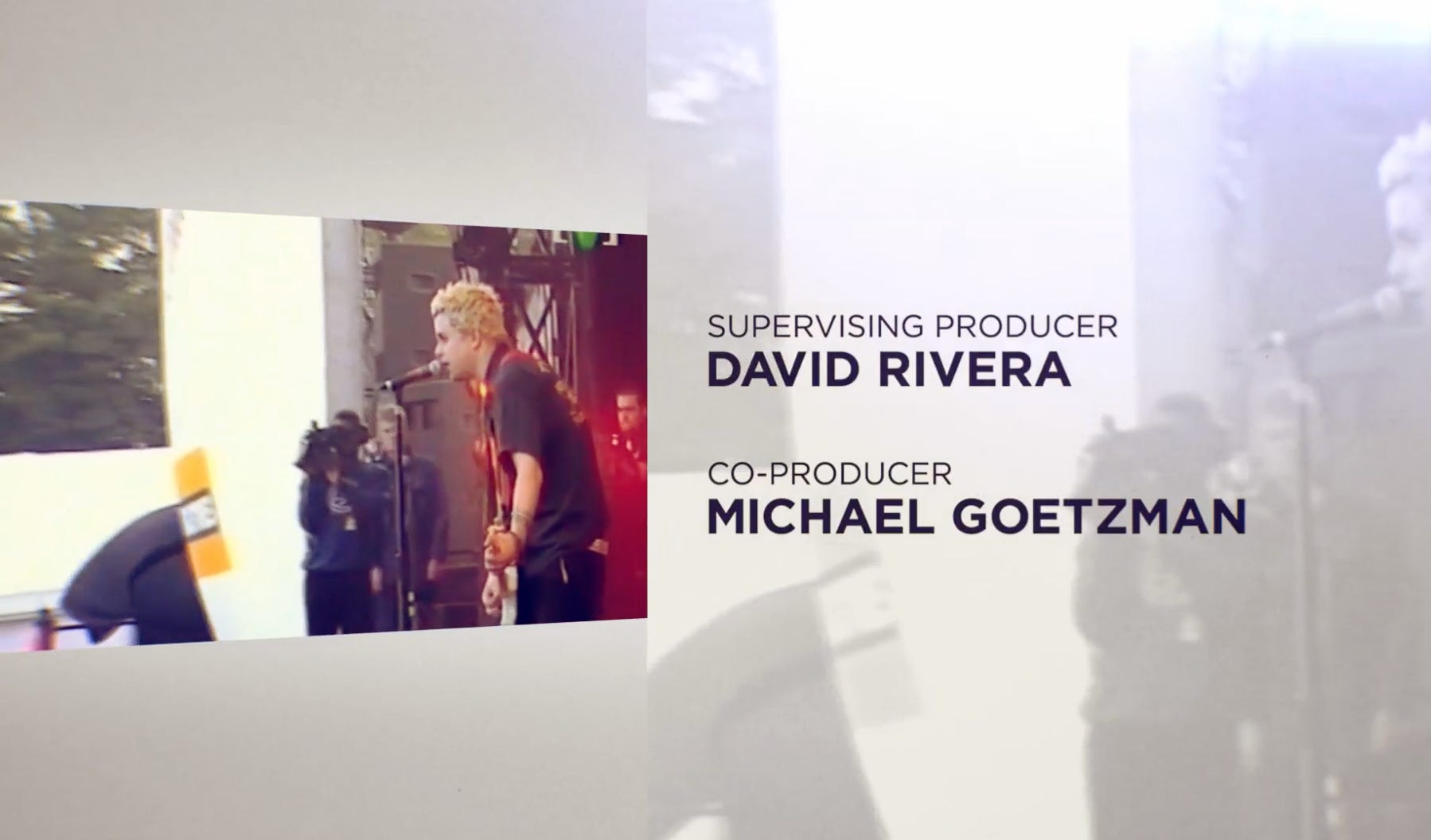
Here it is, Mr. Rucker. If you want to come for someone, come for me.
The Case Against Hootie, Part I: Cultural
It is indisputable that Cracked Rear View sold a shit-ton of units. I quote from Caramanica’s Times profile, not for the last time:
Released with something of a whimper in July 1994, three months after Kurt Cobain’s death, “Cracked Rear View” went on to become one of the defining albums of the 1990s, spawning three indelible, sublime Top 10 hits: “Hold My Hand,” “Let Her Cry” and “Only Wanna Be With You.” It’s the 10th most successful album of all time in this country according to Recording Industry Association of America certification.
For about 18 months, there was no more prominent artist in music … The band won two Grammys in 1996, including best new artist.
It’s not clear to me where Caramanica got his figures. The tenth-best-selling album of all time is the Saturday Night Fever soundtrack, which has moved over 40 million units since it was released in 1977. Counting only American sales, as Caramanica does, is a bit of a fudge, but even then number ten is Dark Side of the Moon. Hootie’s album checks in at 19th place. Certainly respectable.
There is variance among top-ten lists, but here are the top-selling albums of the 1990s, and whether we covered them in The Nineties:
Alanis Morrissette, Jagged Little Pill (covered)
Shania Twain, Come On Over (covered)
Metallica, Metallica (not covered)
Whitney Houston, The Bodyguard soundtrack (covered)
Celine Dion, Falling Into You (not covered)
Hootie & The Blowfish, Cracked Rear View (not covered)
Titanic soundtrack (not covered)
Backstreet Boys, Millennium (covered)
Garth Brooks, Ropin’ the Wind (covered)
Backstreet Boys, Backstreet Boys (covered)
If I had a do-over, I would have included Metallica, whose self-titled album marked the apex of the career of arguably the greatest heavy-metal act of all time. One can also make a case for Celine Dion, who was as big a star as any in the 1990s.
The thing is, we always leave things out. The episode is only 42 minutes long; there is simply not time for every musical act.
There have to be some parameters, and they were these: To merit inclusion, a band not only has to enjoy popular success, it has to make a lasting mark on the culture or to be emblematic of a larger societal trend.
What lasting mark did Hootie leave on the culture? The answer is “none,” and don’t take my word for it, take Caramanica’s:
When the band returned with its follow-up, “Fairweather Johnson,” two years later, the bubble had somehow already burst. Hootie was stupefyingly famous, until it wasn’t. The fall happened quick. After 1996, the year Hootie won two Grammys, it never again cracked the Billboard Hot 100, and after 1998, none of its albums placed in the Top 40 of the album chart.
So then, was the success of Cracked indicative of any larger societal trend? This is the argument:
Hootie became, to some, a punch line — shorthand for the kind of middlebrow rock music that arrived in the wake of grunge’s demise.
Again, Caramica’s words, not mine. And he’s not wrong. Had we included Hootie, it would have been to make this very point. But one of our unwritten rules in the series was: We’re not here to slag artists. If we had included Cracked in our look back at the 90s, I suspect Rucker would be even more upset than he is now. Because, among the twenty or so interviews we conducted with critics, musicians and cultural commentators, none of them had anything nice to say about Hootie. And we did ask.
The Case Against Hootie, Part II: Aesthetic
I will freely admit that I don’t like Hootie’s music. That’s not unusual; we included lots of musical acts in the series that I do not personally care for. To take the list above, I am not a fan of the Backstreet Boys, or of boy bands generally. But they were, inarguably, culturally relevant and indicative of larger societal trends.
That said, I feel obliged to argue against the current critical reappraisal of Cracked Rear View. Again, Caramanica:
Let me stop here to emphasize a truth that has gone unsaid for too long: At its peak, Hootie & the Blowfish was a genuinely excellent band. Earthen, soothing, a little ragged. And also deft, flexible and unflashily skilled. It splendidly blended the Southern college rock of the late 1980s (the dBs, R.E.M.) with shades of vintage soul, bluegrass, blues and more, rendering it all with omnivorous-bar-band acuity. In the gap between late grunge and the commercial rise of hip-hop and rap-rock, Hootie was a balm.
That’s a pile of horseshit from a critic who should know better.
The comparison to R.E.M. is particularly galling. R.E.M., the greatest American band of my generation, was, like Hootie & The Blowfish, a band that emerged from a Southern college town. The similarities end there.
“This band reminds me of Hootie & The Blowfish” is a sentence no one has ever uttered. No band has ever set out to emulate their sound, because their sound is ubiquitous, and had been for years before they hit it big. Hootie was a bar band. There’s nothing wrong with that. They had the fortune to release their breakthrough album at a time when the grunge bands were either in narcotic disrepair or deliberately shrinking their audience, and when MTV still played videos. The ultimate lesson of Cracked is that, so long as Boomers roam the earth, there will always be a market for inoffensive and unchallenging soft rock.
Rucker has since crossed over to a successful and lauded career in country music, a genre which, in its mainstream, has always welcomed pablum.
I am sure he is living comfortably. Undoubtedly, his music has brought joy to millions. So I am surprised that, all these years later, he still holds a grudge over one episode of a CNN documentary series. But it is his right to criticize my work, just as it is my right to criticize his. I wish him well, and I hope that, one day, he gets over it.
If you enjoyed this post and want to read my other work as it’s published, subscribe below. It’s 100% free.
Good account here. My only note is that, in addition to your umbrage at the R.E.M. comparison, there’s insufficient outrage at the attempt to equate fucking Hootie to the dB’s! Holsapple and Stanley are still young enough to pee on the entry keypad to Rucker’s gated community. Next they’ll try to drag Let’s Active into it.
But enough about the 90’s - Who was the bastard in charge of the ‘70s music episode? Waaay too much prog rock, not nearly enough punk. John Lydon was not pleased.